
20 years of Samunnat Nepal
‘I never thought it would work out.’
Malcolm Moore reflects on 20 years working with the Samunnat project and talks about some of the things that have helped it survive and flourish.
This year marks a special celebration for everyone involved with Samunnat Nepal. It’s 20 years since a group of Nepali friends in Birtamod, eastern Nepal, started an organisation to work with women who had experienced violence or abuse. It was a small NGO, working in an area of Jhapa district, with a small budget. It still is! But, along the way, Samunnat has sent ripples that spread far and wide. It is a tribute to the determination and dedication of the organisation’s leaders, and of the many women who have come through its doors and rebuilt their lives. There is more to this story though: why has Samunnat been able to survive and thrive?
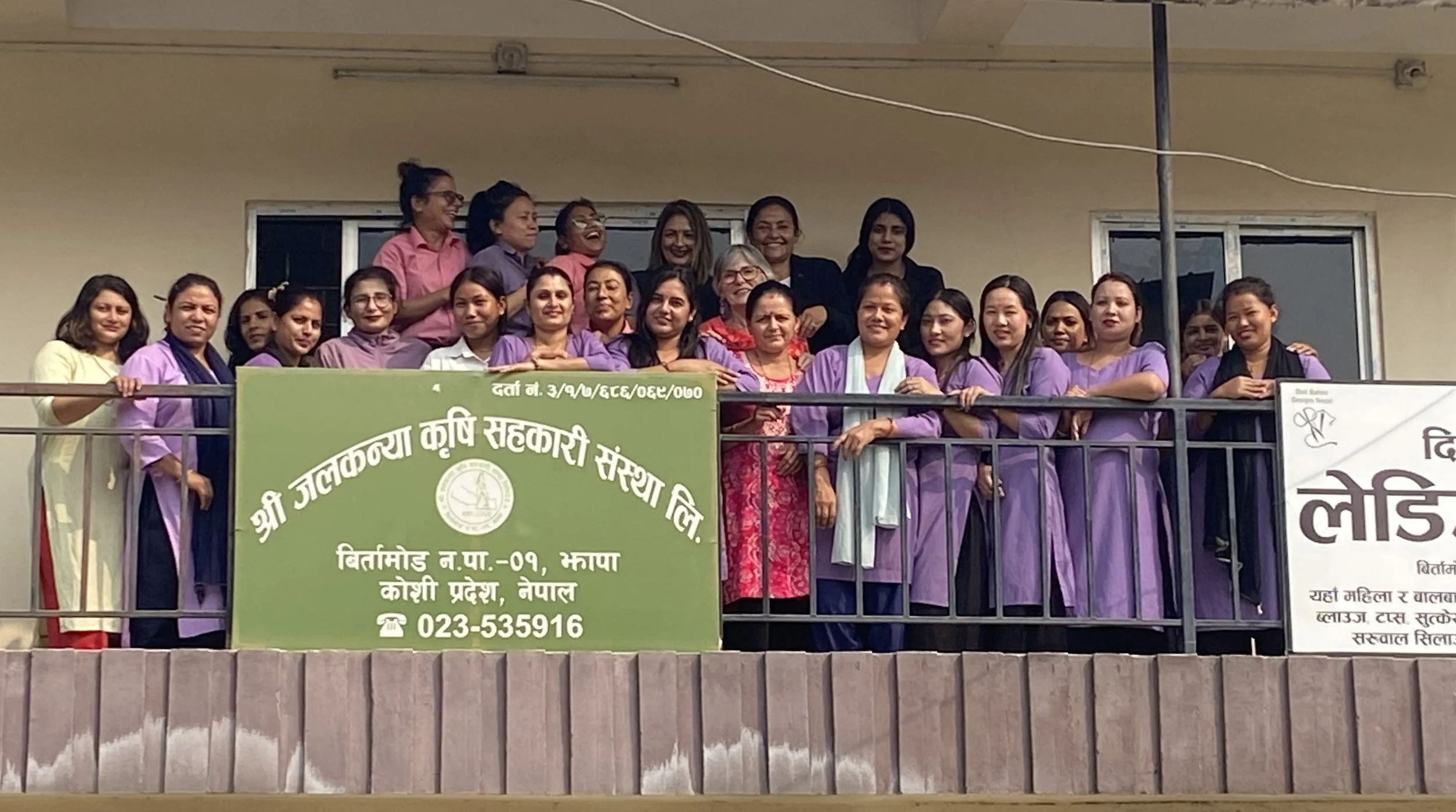
Almost all of the polymer, tailoring, administration and cooperative workers gathered on Samunnat’s balcony
I don’t think there is a model here that an aid agency could discuss as ‘scalable’ and able to be ‘rolled out’. (I’m so grateful that we haven’t had to write many reports using project-speak!) Even though I have skin in this game, I believe I can stand back and be fairly objective. What I have seen is a strong local focus, remarkable people, remarkable qualities, and a fair dose of luck.
Samunnat started locally, worked locally, formed local partnerships, and captured the enthusiasm and skills of its local community. It has forged strong relationships with the local police and the district administration. This local focus has nearly always been an advantage, sometimes it’s better to fly under the radar. However, Nepal is very centred on Kathmandu, and government regulators and international agencies like to demand attendance in the capital for meetings and presenting documents. The plane flight or long bus trip are hard for small organisations. In the east of Nepal, there is also a much smaller group of educated, English-speaking girls and women than is found in Kathmandu. This makes organisational development difficult, a challenge of being authentically local.
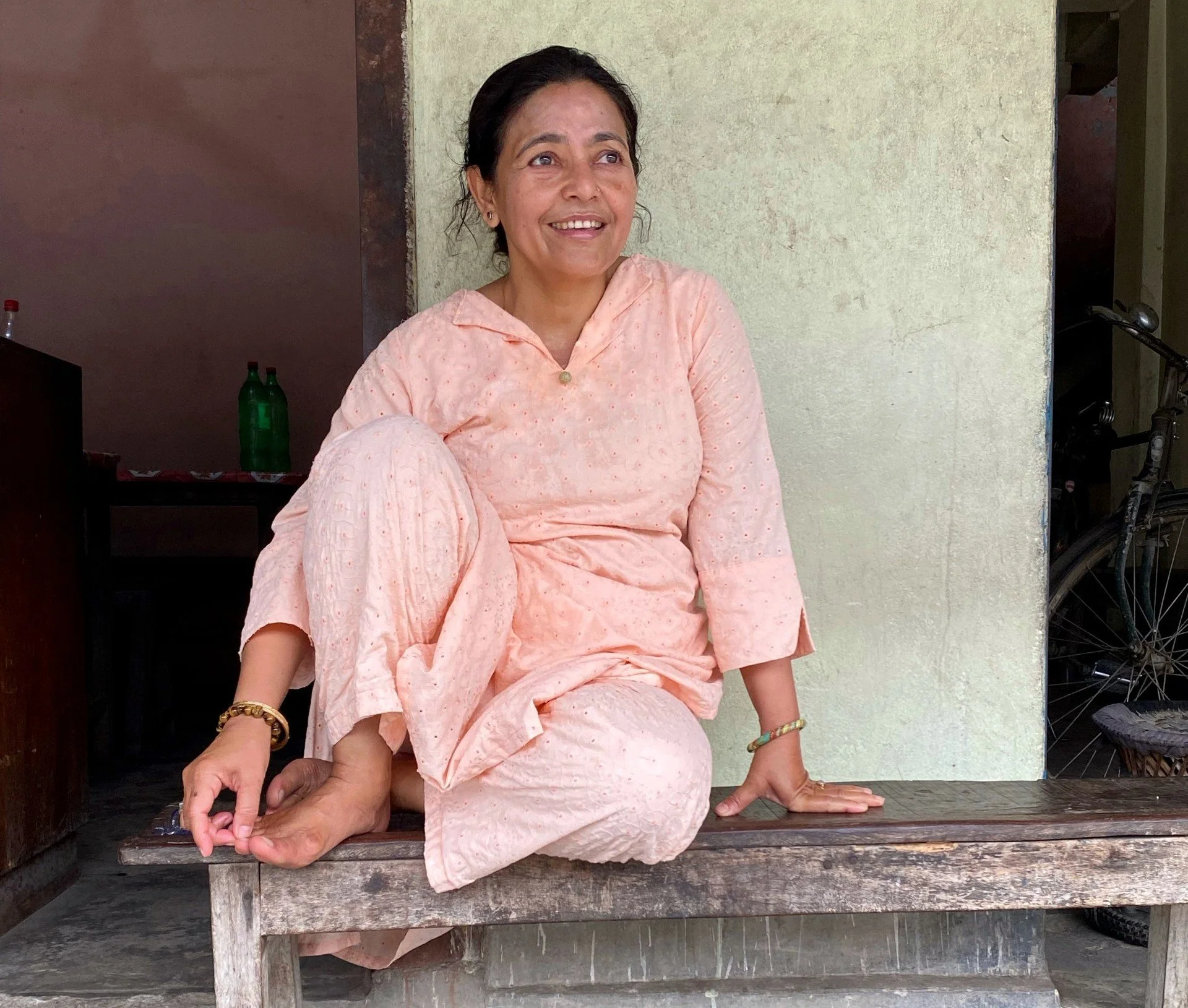
It can’t be hard work all of the time: Kopila bahini finds a tea-house after a long morning walk.
One of Samunnat’s remarkable people is Kopila Khadka. Kopila bahini has such passion, determination and courage, and she uses all of these qualities as she meets with Samunnat’s clients. She fights hard for clients’ legal rights, counsels and supports women in difficulty, and works with individuals and groups across the community. She has a passion for connecting with the community and helping people understand the huge issue of violence and abuse affecting women. She is the heart of Samunnat in eastern Nepal.
Wendy Moore’s influence lies very close to Kopila’s – and I’m not biased! When Kopila asked her to teach the organisation about polymer jewellery in 2006 Wendy was reluctant – but she visited to see what might be possible. Twenty years later she is no longer just a teacher and mentor but a dear friend and sister to Kopila. In fact, she has many friends and sisters across the whole organisation. Wendy lives with Kopila when she visits, twice every year, and they talk many times every week when she is back in Australia.
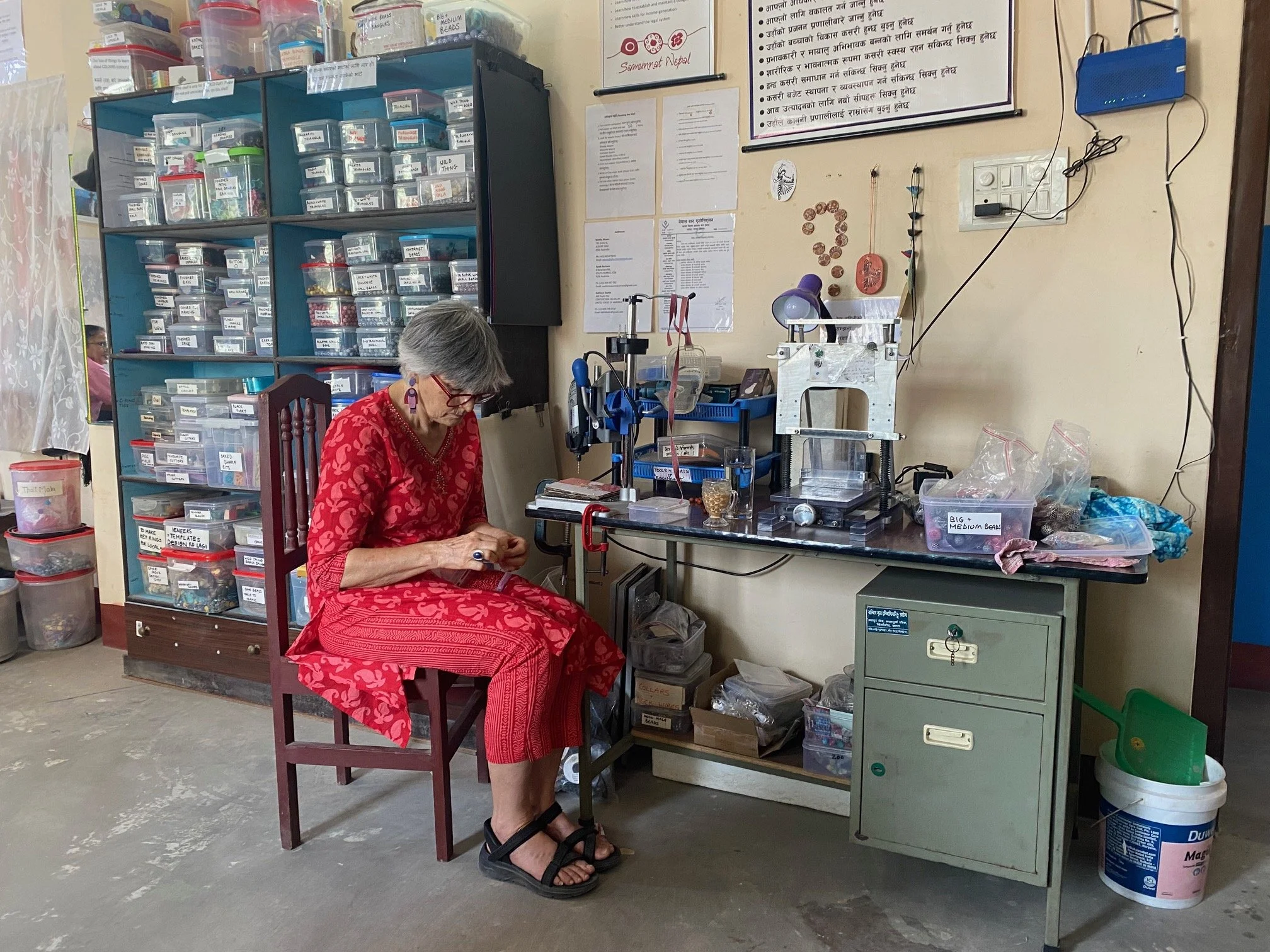
Sometimes you can get lost in a process…Wendy gets into flow.
There are so many remarkable local people involved. Firstly, the women who have come through Samunnat’s programs – several women have been there from the early days. Now, they make up half of the board membership. Some are accomplished artists and designers, problem-solvers, and leaders. A generous local family donated the land for Samunnat’s building, a huge step forward for the organisation.
Extraordinary luck is also part of Samunnat’s story. Kopila and Wendy’s meeting was definitely a ‘sliding-doors’ moment. With that meeting, after a little while, came the meeting with polymer clay. Our initial thoughts that this was absolutely the wrong medium to choose in eastern Nepal – for all kinds of logistical reasons - have been proven wrong. Polymer was unique in the country, it was extremely difficult to copy, it could adapt to local designs, and it opened the door to a generous polymer community in North America and Europe. Several high-profile international polymer artists, including Cynthia Tinapple, Lindly Haunani and Christine Dumont, have played important roles. Kathleen Dustin came to eastern Nepal to share her skills and experience, even guiding Samunnat jewellery to an exhibition at the Smithsonian Institution in Washington D.C. Crucially, the international polymer community and Staedtler, the manufacturer of FIMO clay, donated the money to build Samunnat’s new offices.
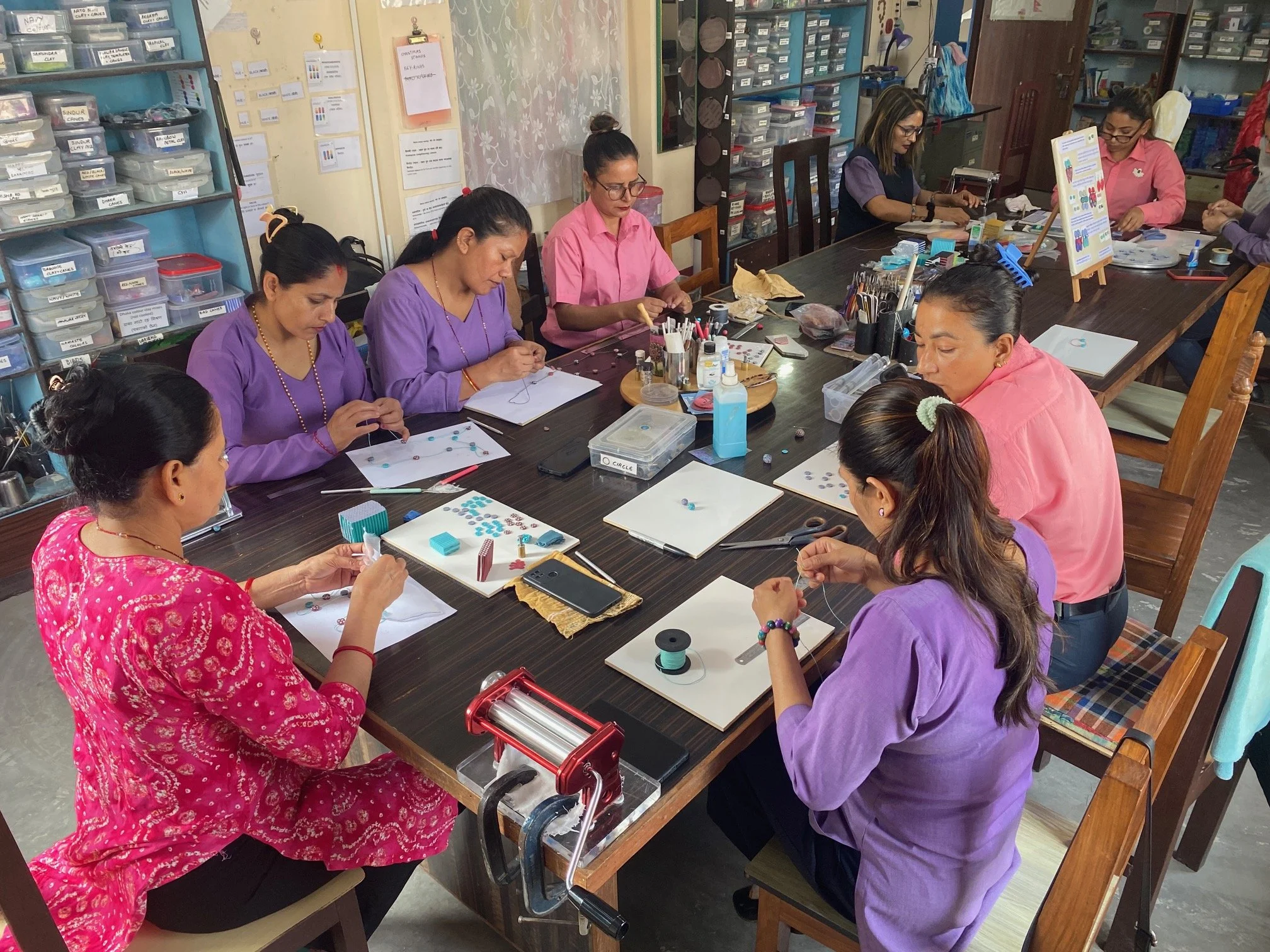
The polymer artists get stuck into a new design
The other, key, feature of working with polymer is that the products can be sold in western markets for decent prices. Samunnat was lucky to find a good deal of financial independence when its polymer jewellery started to sell internationally. In the first years it needed donations and a small grant from an Australian Government aid program to get established. But the polymer sales had, until the COVID pandemic, almost totally funded Samunnat’s programs. Without the need to report to funding bodies or meet KPIs, Samunnat has been able to grow organically, try things, make mistakes and take its time. This is a luxury that isn’t available to many NGOs and charities.
Samunnat’s international links are not limited to the polymer community. Its Australian partner-organisation, Samunnat Inc., works closely with the board and women of Samunnat by phone, Zoom and in twice-yearly visits. At first, this was mostly for skills training, organisational advice and help with international liaison. Now, it includes managing international sales, help with strategic planning, document writing, and translation. Wendy can talk to Kopila and the polymer team most days. It’s a far cry from the early days of struggling with email, frequent power-cuts and terrible phone connections.
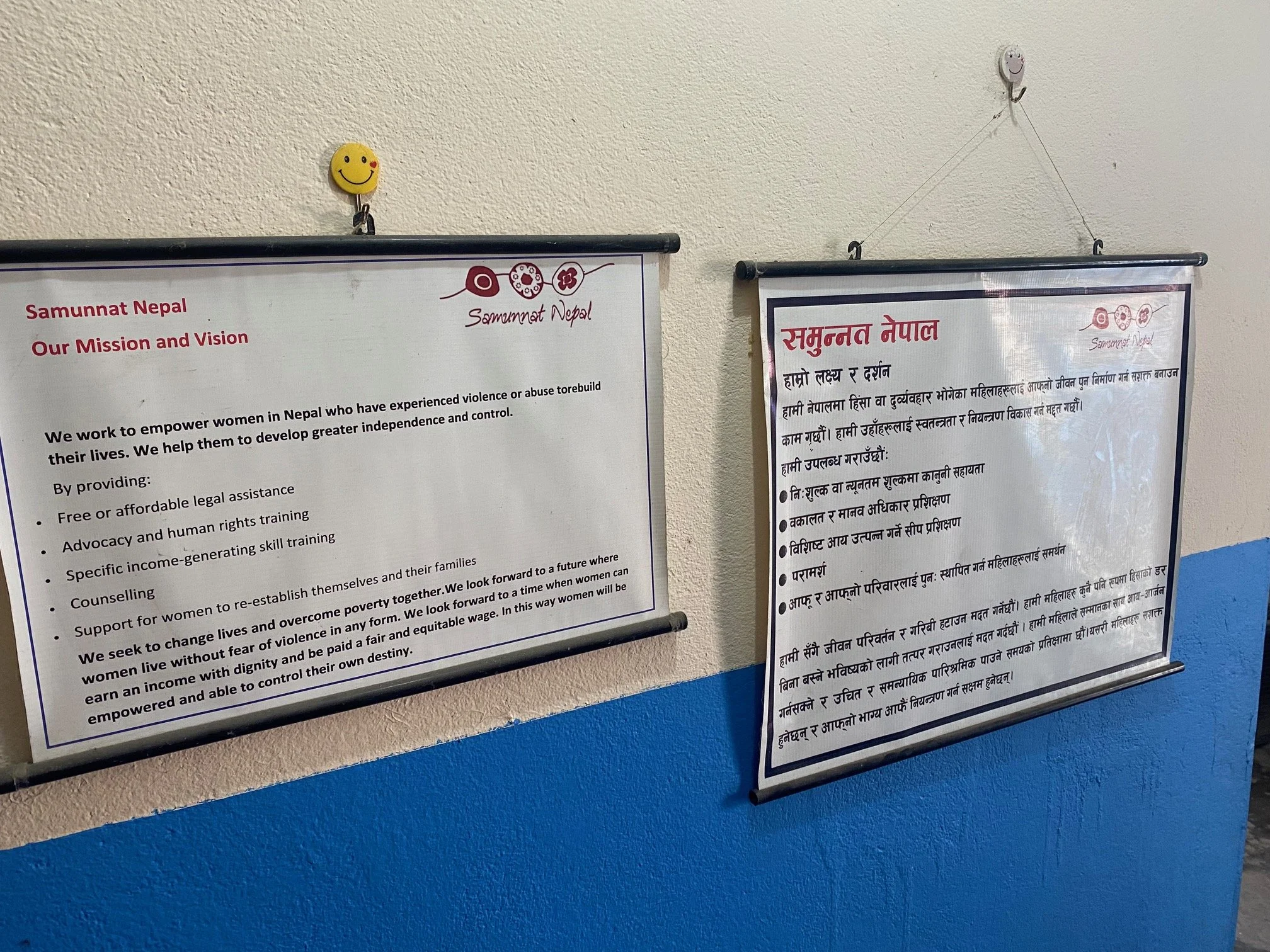
Translation tools have helped enormously!
Samunnat continues to grow and respond to its changing situation. It has started a tailoring group because it seems to provide the best opportunity for women to train, move on and start their own business. Samunnat Inc’s Janice Laurent is training and supporting this group by phone, Zoom and face-to-face. It is selling into the local market as well as looking at opportunities for international sales.
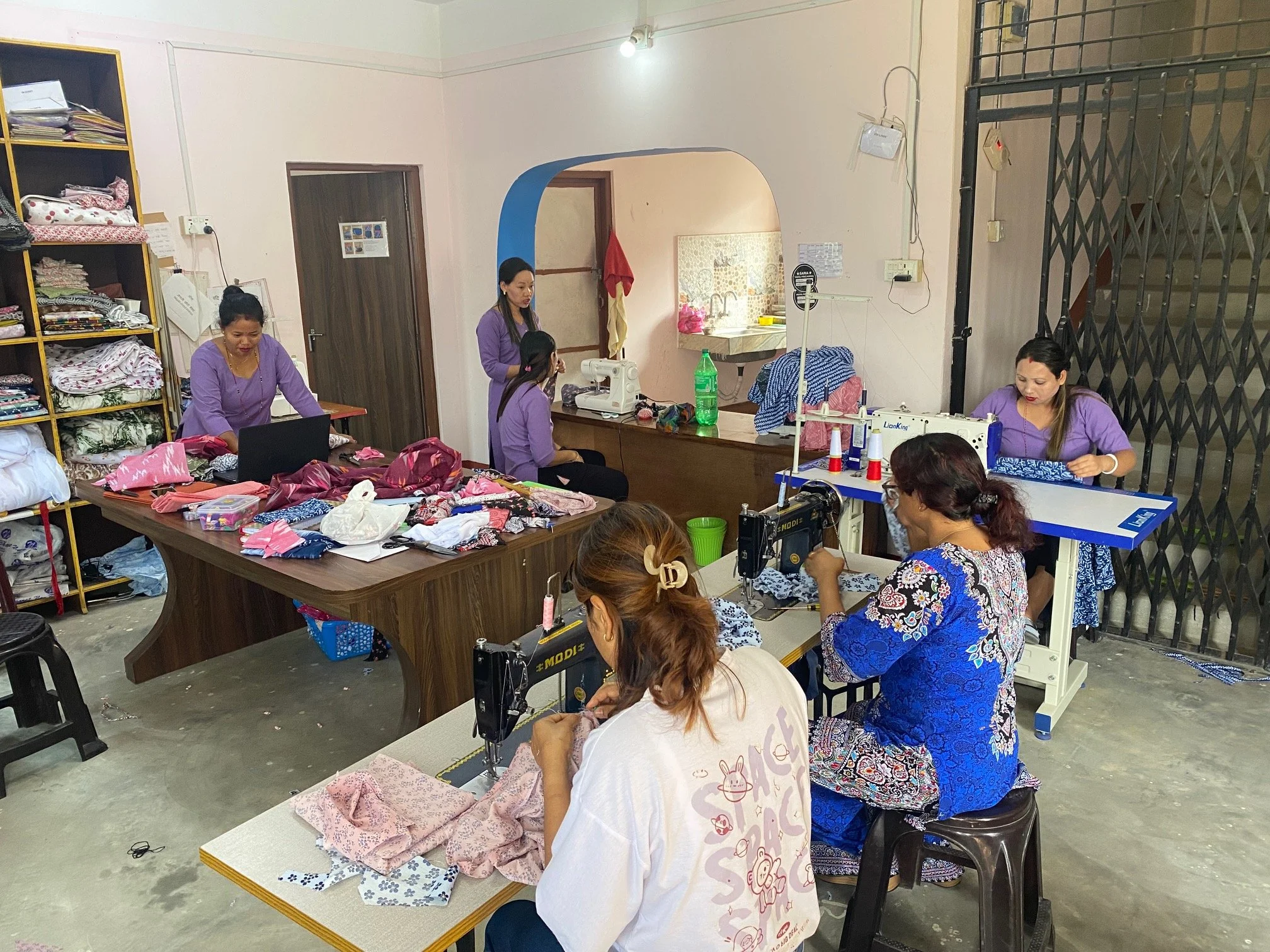
The tailoring group is busy making pieces for the local market, and working on designs for international sales.
So, this small, locally-grown organisation is full of remarkable people and international connections. There are several principles that have underpinned this story. Flexibility and responsiveness have been crucial, through the countless changes of premises, programs and personnel. Together with this has been curiosity and a willingness to try things out. Because Samunnat’s international sales provided so much of its early income, it didn’t need to chase grants and follow the wishes of donors. There has been time to experiment and seek solutions.
The challenge, now, is to stay flexible and keep changing where it’s needed. I was recently in Birtamod, where we met with Samunnat’s Board. They are rightly proud of everything that the organisation has achieved through its programs. We had a lively discussion about how Samunnat might adapt its training programs at a time when it is so difficult for women to find work. They are keen to grow their activity in community education and networking with other community groups. Above all, the women on the board spoke strongly about how they had been empowered, gained self-reliance and become confident and vocal. They know why Samunnat exists.
This post was revised and expanded on 27/7/2026